Duende—Is the goblin in our shoulder inspiring our best work?
An artist's dream is to produce a work that's not only entertaining but inspiring; something that's not merely beautiful, but profound; something transformative for the person who is experiencing the work of art. In 2026 our art must remain distinct from what AI can produce, and the only thing AI cannot do is transcend the fear of its own death.
Since I was 3 years old, I've loved to read, and there have been a lot of books that have entertained me, some that have delighted me by their clever or elegant use of language, and some that have bored me silly. The ones I have enjoyed the most are the ones that inspired me or helped me bring about a transformation in myself. That's a rare book indeed.
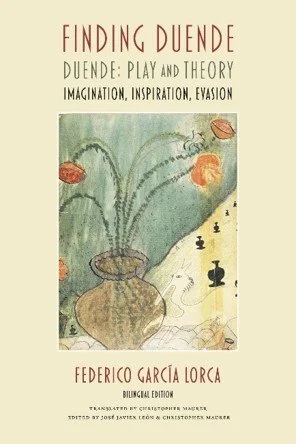
I recently watched a reel (https://www.facebook.com/reel/1456284656333188) where Damián María Montes, doctor in Hispanic Philology, talks about Federico García Lorca's theory of duende. In Spanish, duende can mean elf, imp, or sprite. For Lorca, it’s a darker spirit, like a goblin, or a gargoyle. It's the spirit that imbues a work with soul—what happens when the artist confronts their deepest fears and surrenders to the creation of what needs to be expressed. It’s moved me to read Finding Duende: Duende: Play and Theory | Imagination, Inspiration, Evasion to learn more about this theory. It’s made me wonder if and when the work I have produced is the result of a duende’s prodding.—I will revisit these thoughts after I read Lorca’s own words.
A few years ago, I was impacted by Simran Chugani’s duende-infused spoken word poetry. It was raw, personal, and true. The same can be said of Amanda Gorman and Julia de Burgos. Their work touches my body and soul.
According to Montes, Lorca talks about three creative forces: the angel, the muse, and the duende. The angel is what makes a work perfect and beautiful, and the muse makes it clever and entertaining, but the duende makes it profound. It is felt in body and soul.
The duende cannot be invited or induced to join the creative effort. It cannot be searched for and discovered. No amount of education, discipline, technical prowess, or coaching can produce work with soul and transformative power. The duende only comes when the artist faces death: their deepest fears of failure, being misunderstood, or whatever their greatest nightmare regarding their art is.
Damián María Montes tells us, “When a creator crosses the threshold of that death, then the masterpiece full of goblin appears because it is full of truth. And when a work manages to awaken that sleeping part in those who contemplate it, it ceases to be entertainment to become a revelation… According to this idea of the duende, the works that remain are not always the most brilliant, but the truest because the truth is not fabricated, the truth happens. And in that event the body recognizes it before reason. Your skin crawls, there is silence... something inside whispers or shouts that there is life there.
“That's the duende.”
This is how coaching as accompaniment while facing your fears can be most rewarding. It is so much easier to face the dread of our mortality and imperfection when someone we respect holds space for us to do what we must! Only when the artist is capable of laughing in the face of this terror can they humbly submit to the expression of something so real and true that it leaves the reader, the listener, the observer breathless and in awe. Their life, and the artist's life, will never be the same.
Readers, please let me know what you think:
· Have you ever felt the presence of the goblin?
· Does your own work have duende?
· Is duende the answer to the AI literary challenge?
· Is impostor syndrome part of this existential fear?